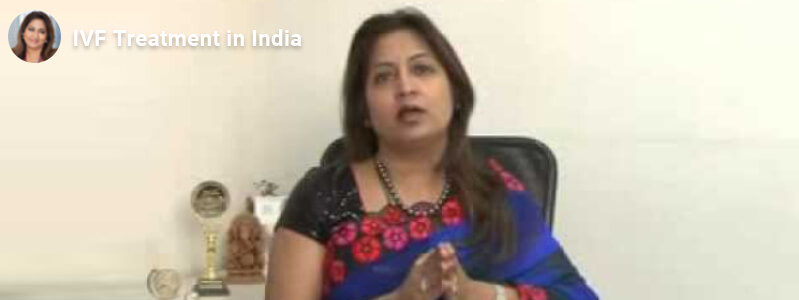
IVF (In Vitro Fertilisation) is the process of surgically removing a woman's eggs and fertilising them with a man's sperm in controlled laboratory condition. In case of an obstruction in the fallopian tube that incapacitates normal ovum sperm fertilisation the IVF method is adopted.
IVF - Do we Need It?
If you're a couple who has had trouble achieving pregnancy in the natural manner and have not achieved positive results after 12 consecutive cycles of artificial insemination you will find IVF a source of immense hope.
IVF - India Or Abroad
IVF in India is now a popular medical technology with modern facilities. In fact recent trends suggest that IVF constitutes 32 % of medical tourism in India from the USA and the UK. Dr. Nandita Palshetkar for example is one of the foremost in IVF doctors in India and abroad with clinics in several major cities in India.
IVF - How Is It Performed?
There are six major steps involved:
- Suppression of the monthly cycle with the help of daily injections for about two weeks.
- Boosting egg supply by daily injections of follicle stimulating hormone (FSH) for 10-12 days.
- Progress monitoring and final egg boost injection about 34-38 hours before egg collection.
- Egg collection involves sedation followed by ultrasound guided needle based extraction of eggs from each of the ovaries. Some women may experience a bit of vaginal bleeding after this procedure.
- The eggs are fertilised with your partner's sperm in controlled laboratory conditions for 5-6 days. You're given progesterone or hCG (chorionic gonadotrophin) to prepare the womb to recieve an embryo.
- Embryo transfer based on the counselling done beforehand and the patient's age and general health is performed.
In Vitro Fertilisation (IVF)
In order for pregnancy to occur, an egg has to be released from the ovary and unite with a sperm. Normally this union, called fertilisation, occurs within the fallopian tube, which joins the uterus (womb) to the ovary. However, in IVF the union occurs in a laboratory after eggs and sperm have been collected. Embryos are then transferred to the uterus to continue growth.
Infertility India provides affordable quality infertility treatments with all advanced reproductive technologies. Specialise in IVF clinic, IVF treatment, IVF cycle & IVF.
Candidates
Both fallopian tubes are absent or blocked due to surgery or tubal pregnancy) or infection (STD, or Tuberculosis)
Endometriosis
Reduced sperm count or motility (IVF can be normally performed for counts which are more than 5 million per ml. For counts less than 5 million per ml. ICSI is a better option.) Patients where all other treatments such as ovulation induction with intra uterine insemination have proven unsuccessful.
Patients with unexplained infertility where all the investigations performed on the couple are normal, but who still do not conceive with routine treatments.
Patients who have failed to become pregnant inspite of all routine treatments of infertility.
Patients who want to become pregnant by the procedure of embryo and egg donation.
Procedure
There are five major steps in the IVF and embryo transfer sequence:
- Monitor the development of ripening egg(s) in the ovaries
- Collection of eggs
- Obtaining the sperm
- Putting the eggs and sperm together in the laboratory, and providing correct conditions for fertilisation and early embryo growth
- Transferring the embryos into the uterus
To control the timing of egg ripening and to increase the chance of collecting substantial number of eggs, fertility drugs are prescribed according to each individual case. Before dertemining the egg retreival schedule, we perform an ultrasound of the ovaries to check the development of eggs and a blood/urine test to measure hormone levels.
The Egg Retrieval Process
The retrieval procedure to obtain the eggs is performed trans-vaginally using a hollow needle guided by the ultrasound image (this is completely comfortable under adequate sedation and local anesthesia). Eggs are gently removed from the ovaries using the needle. This is called "follicular aspiration." Its timing is crucial because the egg will not develop properly if it is collected too early; if too late, the egg also may develop poorly or may have already been released from the ovary and lost.
The eggs are immediately identified by our embryologists in our special IVF laboratory. They are placed with the sperm in incubators to allow fertilisation to take place. The eggs are examined carefully at intervals to ensure that fertilisation and cell division have taken place; the fertilised eggs are now called embryos.
Embryos are usually placed in the wife's uterus 2 or 3 days after egg retrieval. A speculum is inserted into the vagina to expose the neck of the womb (cervix). The embryos are suspended in a tiny drop of fluid and then very gently introduced through a catheter into the womb, often under ultrasound guidance. The transfer is followed by a resting period, blood tests and possibly ultrasound examinations to verify if pregnancy has been established.
To summarise, the IVF procedure consists of:
- Controlled Ovarian stimulation with drugs (GNRH Analogues and Gonadotrophins) to produce many eggs.
- Monitoring of follicles and egg development with the aid of vaginal sonography and serial Estradiol hormone estimation.
- Administration of HCG injection, (Human Chorionic Gonadotrophins) when the two leading follicles are 18mm in diameter.
- Oocyte or egg retrieval under short general anesthesia, 35 to 37 hours after HCG injection.
- Identification and isolation of eggs in the laboratory.
- Sperm collection and processing in the lab.
- Fertilisation of the egg with the sperm.
- Embryo formation 2 to 5 days after fertilisation.
- Embryo transfer of good quality embryos back to the womb, after 2(four cell embryo), 3 (six-eight cell embryo) or 5 (blastocyst stage) days after egg removal.
Dr. Nandita Palshetkar is a fertility specialist in Mumbai, India, who combines clinical experience with modern IVF technology in infertility treatment. For more information or consultation please write to info@nanditapalshetkar.com
 Pune OPD · 1 September
Navi Mumbai · 10 September