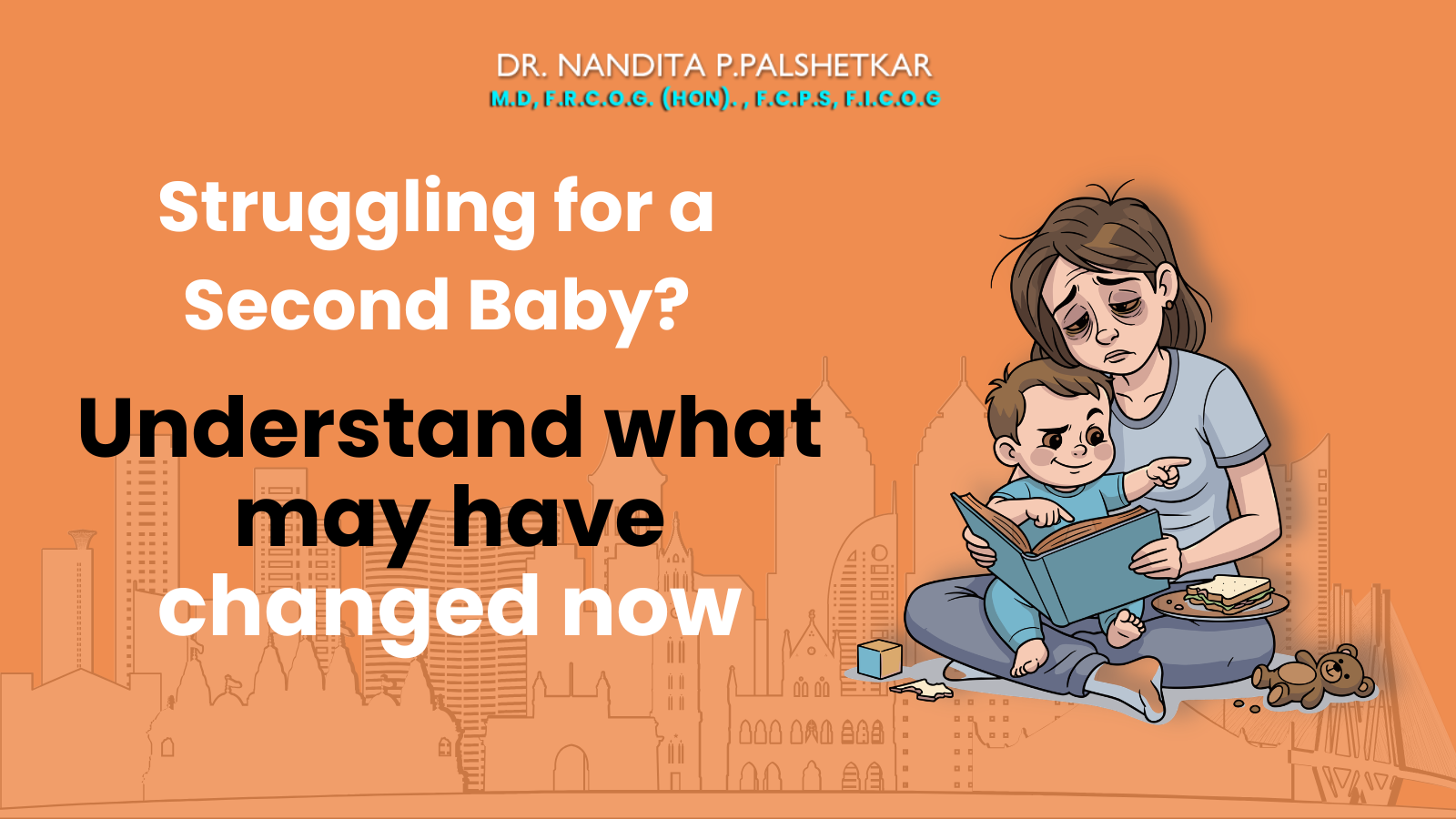
If you already have a child and are struggling to conceive again, you are not alone. In India, secondary infertility - the inability to conceive after a previous successful pregnancy - now affects nearly 29% of couples, with urban metros like Mumbai seeing a sharp rise in such cases.
For many couples, this comes as a complete shock. They successfully had a baby once, so why can't they now? At Bloom IVF, Dr. Nandita P. Palshetkar and her team specialise in helping couples experiencing secondary infertility find the answers - and the path forward - with advanced IVF technologies and compassionate care.
Book a Free Consultation for Secondary Infertility
What Exactly Is Secondary Infertility?
Secondary infertility is defined as difficulty conceiving for at least one year (for women under 35) after having had one or more children already. For women over 35, the diagnosis may be made after 6 months of trying without success.
It is often called the "silent struggle" because couples facing it frequently feel dismissed - by family, friends, and even doctors - with comments like "You already have a child, be grateful." But for couples longing to grow their family, secondary infertility is just as painful and emotionally draining as primary infertility.
Why Is Secondary Infertility on the Rise in Mumbai?
Mumbai's fast-paced lifestyle, delayed second pregnancies, career pressures, and increased maternal age are contributing to a rise in secondary infertility cases. Here are the most common causes:
1. Decline in Sperm Quality With Age
As men age, sperm production, motility, and cellular structure can deteriorate - meaning that even if your partner's semen analysis was normal during your first pregnancy, it may have changed by now.
2. Fallopian Tube Problems
Conditions like blocked fallopian tubes, endometriosis, or new uterine issues (such as fibroids or polyps) can develop over time, interfering with ovulation and fertilisation. These conditions may not have been present during the first pregnancy.
3. Complications From Previous Pregnancies
A history of C-sections, D&Cs, postpartum infections, or other obstetrical complications can sometimes cause scarring or adhesions that affect future fertility.
4. Age-Related Decline in Egg Quality
A woman's egg quality and quantity naturally decline with age. If you had your first child in your late 20s and are now trying again in your mid-30s, your ovarian reserve and egg quality may have dropped significantly - a factor that was not a concern the first time around.
5. Weight Changes and Lifestyle Factors
Gaining weight after the first pregnancy, developing PCOS, thyroid dysfunction, or other health conditions can also contribute to secondary infertility.
Know More About PCOS and Fertility
When Should You Seek Help for Secondary Infertility?
If you are under 35 and have been trying for one year without success, or over 35 and have been trying for 6 months, it is time to consult a qualified IVF specialist. Early evaluation can uncover underlying issues and significantly improve your chances of success.
At Bloom IVF, couples undergo comprehensive fertility assessments including:
- Full hormonal profiling for both partners
- Semen analysis to check sperm count, motility, and morphology
- Ultrasound and HSG to evaluate uterine and tubal health
- AMH testing to assess ovarian reserve
- Personalised treatment planning based on findings
Explore Fertility Evaluation & Treatments
How Bloom IVF Helps Couples Overcome Secondary Infertility
Dr. Nandita P. Palshetkar has over 30 years of experience in treating infertility, including thousands of cases of secondary infertility across her 8 Bloom IVF centres in India. Under her expert care, couples have access to a full spectrum of advanced fertility treatments tailored to their specific needs.
Treatment Options for Secondary Infertility
1. Ovulation Induction
If irregular ovulation is the cause, fertility medications can help stimulate egg production and regulate cycles.
2. IUI (Intrauterine Insemination)
For mild male factor infertility or unexplained secondary infertility, IUI involves placing washed sperm directly into the uterus around ovulation time.
Learn More About IUI Treatment
3. IVF with ICSI
For more complex cases, IVF (In Vitro Fertilisation) with ICSI (Intracytoplasmic Sperm Injection) - a technique Dr. Nandita introduced to India in 1996 - can help overcome sperm quality issues, tubal blockages, and egg quality concerns.
Understand IVF & ICSI Treatment
4. Laser-Assisted Hatching
This breakthrough technology, first introduced by Dr. Nandita in India in 1998, helps the embryo implant more effectively into the uterine lining.
Discover Laser-Assisted Hatching
5. Egg Donation
For women whose egg quality has declined significantly with age, egg donation offers a highly effective solution with success rates of 50–70% per cycle.
Learn About Egg Donation
6. Recurrent IVF Failure Treatment
If you have had failed IVF cycles before, Bloom IVF offers specialised protocols to identify the root cause and improve outcomes.
Get Help for Recurrent IVF Failure
Why Secondary Infertility Should Not Be Ignored
According to experts, early medical evaluation is crucial because it can uncover treatable conditions and significantly improve success rates. The longer couples wait to seek help, the more their fertility potential can decline - especially for women above 35.
Secondary infertility is not something couples should navigate alone. With the right diagnosis, advanced treatment options, and a supportive medical team, many couples successfully go on to have a second child.
Why Choose Dr. Nandita Palshetkar for Secondary Infertility Treatment in Mumbai?
Dr. Nandita P. Palshetkar is not just an IVF specialist - she is a pioneer who has introduced path-breaking fertility technologies to India, including ICSI (1996), Laser Hatching (1998), Egg Freezing (2007), Embryoscope (2012), and non-invasive PGT-A.
What Sets Dr. Nandita Apart:
- 30+ years of experience treating all forms of infertility, including secondary infertility
- 25,000+ successful IVF cycles across 8 Bloom IVF centres in India
- Among the first in Asia to introduce Embryoscope technology for continuous embryo monitoring
- President of FOGSI (2019) and currently President of AMOGS - the only person to have headed all major national and state OBGYN organisations in India
- Honorary FRCOG (UK) from the Royal College of Obstetricians and Gynaecologists
- Sarvottam Naari Samman Award 2026 and Lifetime Achievement Award at ISAR
- Over 900 talks, 100+ research papers, and 25+ edited books
Know the Doctor – Profile of Dr. Nandita
Success Stories of Hope
At Bloom IVF, couples with secondary infertility have successfully welcomed their second child through personalised treatment plans. Recent patient reviews highlight Dr. Nandita's compassionate approach, transparent communication, and consistent availability for support throughout the fertility journey.
Read Patient Testimonials
FAQs on Secondary Infertility
1. What is the difference between primary and secondary infertility?
Primary infertility refers to couples who have never been able to conceive, while secondary infertility affects couples who have had at least one successful pregnancy but are now struggling to conceive again. Interestingly, many of the underlying causes - such as hormonal imbalances, sperm quality issues, and tubal problems - overlap between the two conditions.
2. Why am I unable to conceive a second child when I had no trouble the first time?
Fertility changes over time. Your partner's sperm quality may have declined with age, your ovarian reserve and egg quality may have reduced, or you may have developed new health conditions like PCOS, endometriosis, or thyroid issues that were not present before. These factors need to be evaluated by a fertility specialist.
3. What is the success rate of IVF for secondary infertility?
IVF success rates for secondary infertility are generally comparable to primary infertility rates. Women under 35 can see success rates of 50–60% per cycle, while women aged 35–40 may see 30–40% per cycle, depending on individual factors. Dr. Nandita's clinic maintains global success rates of 40–50% live birth rate.
4. How much does IVF treatment cost in Mumbai for secondary infertility?
IVF costs vary based on age, medications, treatment type (IVF, ICSI, donor eggs), and add-on procedures. At Bloom IVF, treatment plans are fully transparent with clear cost breakdowns provided before starting.
5. How can I book an appointment with Dr. Nandita Palshetkar?
You can easily book a free consultation by filling out the online form on Dr. Nandita's website or contacting the clinic directly via phone or WhatsApp.
Start Your Journey to a Second Baby Today
Secondary infertility may feel overwhelming, but it is a treatable condition. With advanced fertility technologies, expert guidance from Dr. Nandita P. Palshetkar, and the comprehensive care at Bloom IVF, your dream of a second child can become a reality.
 Pune OPD · 1 September
Navi Mumbai · 10 September
Pune OPD · 1 September
Navi Mumbai · 10 September